
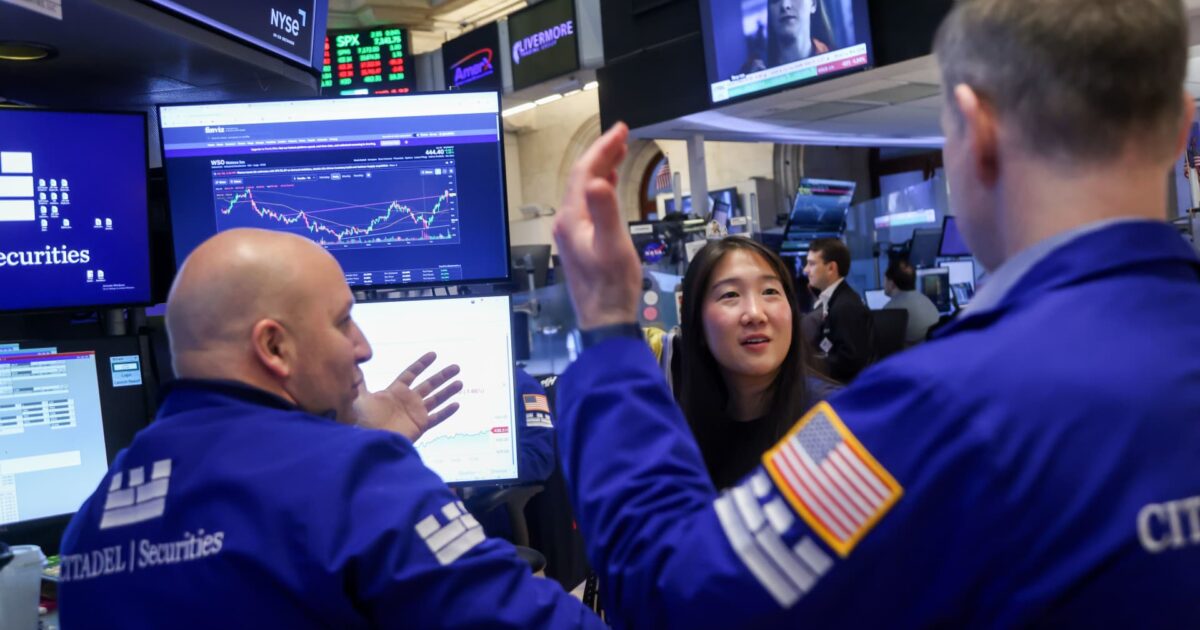

S&P 500 futures fell early Thursday following quarterly earnings reports from prominent tech companies.
Futures linked to the S&P 500 lost 0.22%, while Nasdaq 100 futures decreased by 0.23%. The Dow Jones Industrial Average futures fell by 285 points, or 0.58%.
During the regular session, the Dow lost 280.12 points, or 0.57%, marking its fifth consecutive losing day. The broader S&P 500 saw a minor decline of 0.04%, while the Nasdaq Composite recorded a slight gain of 0.04%.
Shares of Meta, part of the ‘Magnificent Seven,’ fell 7% after its earnings reports revealed lower-than-expected capital expenditures and disappointing user growth. Microsoft shares remained relatively unchanged following its earnings beat and a 40% surge in Azure revenue.
Alphabet and Amazon also released results after the market closed on Wednesday. Alphabet shares increased by 7% after surpassing first-quarter revenue expectations, boosted by strong Google Cloud performance.
Amazon’s stock rose about 3% following its first-quarter results, which also beat expectations, aided by significant cloud computing revenue growth. Meanwhile, oil prices increased amid heightened tensions between the U.S. and Iran.
The Wall Street Journal reported that President Donald Trump instructed aides to prepare for an extended blockade of Iran. This increase in oil prices followed Trump’s rejection of Iran’s proposal to reopen the Strait of Hormuz.
On Wednesday, the Federal Reserve decided to maintain interest rates between 3.5% and 3.75%. This decision was widely anticipated, although it marked the first dissent from four Fed officials since 1992.
April’s Fed policy meeting may be significant as it could be Fed Chair Jerome Powell’s last before his term expires next month. Kevin Warsh, nominated by Trump to replace Powell, seems on track to take over the central bank.
Sonu Varghese, a global macro strategist with Carson Group, noted that there are increasing obstacles to rate cuts. He stated, “The Fed held rates unchanged and we expect that to continue for the rest of this year.”
Several FOMC members are reportedly uneasy about rising inflation and want to indicate that the next move may not be straightforward.

Related Articles

Piper Rockelle Faces Backlash for Meeting 58-Year-Old Fan
Piper Rockelle, 18, sparks outrage after praising a 58-year-old fan who has followed her since she was 12 years old.
Michael Jackson Biopic Breaks Records Amid Controversy
The Michael Jackson biopic opened to $218 million, sparking debates over its portrayal of the pop star’s legacy.

Man Arrested for Alleged Theft at CPS Energy Facility
Genaro Jesus Rivera Jr. faces multiple charges for allegedly stealing copper and causing over $3,000 in damages at a CPS Energy facility.