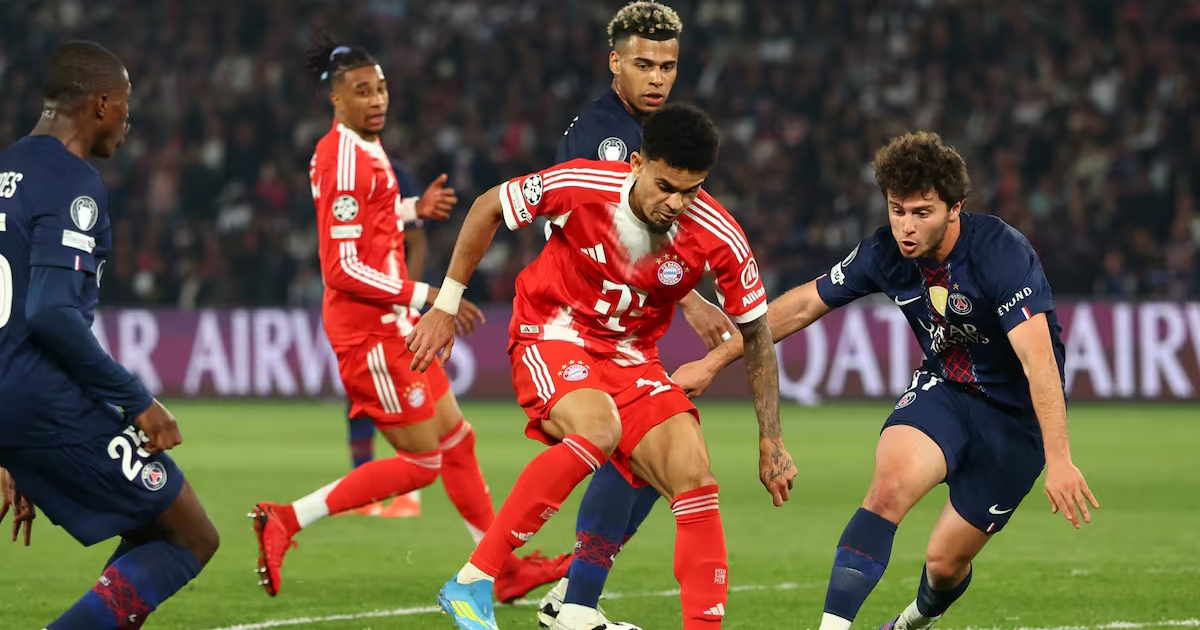

PSG vs Bayern Munich produced one of the most explosive Champions League semi-final matches in recent memory, with nine goals, relentless pressing, tactical risks, and world-class attacking football. Played on April 30, 2026, the first leg became a showcase of modern football chaos, where structure often lost against speed, movement, and moments of genius.
Paris Saint-Germain eventually emerged with a dramatic 5-4 victory, but the scoreline only tells half the story. This was not simply a shootout. It was a chess match between Luis Enrique and Vincent Kompany, two coaches who chose aggression over caution.
As one PSG staff member reportedly said after the final whistle: “We knew the spaces would appear if we stayed brave.”
That bravery decided the night.
How Bayern Started Strong
Bayern entered the match with a clear identity. Kompany deployed his usual attacking 4-2-3-1 system, with Harry Kane leading the line, supported by creative runners and aggressive midfield pressing.
From the opening minutes, Bayern pressed high in a man-to-man structure. Kane and Musiala led the first wave, while the midfield stepped forward to suffocate PSG’s buildup.
That approach created early rewards.
PSG struggled to play out cleanly, losing possession in dangerous areas. Bayern attacked quickly after turnovers, and their directness unsettled the hosts. Kane eventually converted from the penalty spot after sharp movement in the box gave Bayern the lead.
At that stage, Bayern looked sharper, more organized, and more dangerous.
Their possession numbers were stronger. Their expected goals were higher. Their pressing was disruptive.
But there was one problem: the system also left space everywhere.
Luis Enrique’s Tactical Adjustment Changed Everything
Luis Enrique recognized early that trying to dominate possession against Bayern’s pressure would be inefficient. Instead of forcing buildup patterns, PSG gradually shifted into a more vertical plan.
That was the turning point.
PSG began using longer passes into dropping forwards and rotating midfielders. Once Bayern defenders followed markers aggressively, spaces opened behind them.
This is where PSG became devastating.
Rather than fixed positions, PSG’s front line constantly rotated. Wide players drifted inside, attackers dropped between lines, and full-backs surged into open channels.
One PSG insider described the plan simply: “If they follow us everywhere, someone becomes free.”
That happened repeatedly.
PSG’s equalizer came after clever movement pulled Bayern’s defensive line apart. Another goal arrived from a set-piece, where smart movement inside the box punished poor marking.
By halftime, the game had already exploded into a multi-goal spectacle.
Why PSG’s Transition Play Destroyed Bayern
The biggest tactical theme of PSG vs Bayern Munich was transition football.
Whenever either side lost the ball, the next five seconds became dangerous.
PSG were especially ruthless because they stopped overcomplicating possession. Once they recovered the ball, they attacked immediately into open grass.
That is how they built control without controlling the ball.
In the second half, Enrique pushed full-backs higher and created overloads in wide areas. Bayern’s man-oriented marking became a liability. When one defender followed a runner, another zone opened.
PSG’s fourth goal summed it up perfectly: a direct pass into space, a quick penetration run, a low cut-back, and composed finishing.
Soon after, another fast break made it 5-2.
At that moment, Bayern looked broken.
Yet Kompany’s side refused to collapse.
Bayern’s Comeback Warning Signs
Even while trailing, Bayern continued to create chances. PSG’s more reactive defensive block lowered their possession share and invited pressure.
That nearly cost them.
A set-piece goal revived Bayern. Then another quick transition exposed PSG’s back line, allowing Bayern to narrow the deficit again.
Kane remained central to everything. His hold-up play, passing range, and movement between lines repeatedly caused problems.
If Bayern had been more clinical earlier—or more balanced defensively—they may have left Paris with a very different result.
Kompany admitted after the match: “We attacked well, but we gave them too much room when the game opened up.”
That sentence explains the night perfectly.
Can Bayern Still Come Back?
Absolutely.
Despite losing 5-4, Bayern remain alive because they scored four away goals in a match where PSG also looked vulnerable defensively.
The second leg will likely depend on one major question:
Will Kompany stay brave, or become more controlled?
If Bayern attack with the same freedom, they can score again. But if they leave similar spaces, PSG’s pace and movement can punish them once more.
Luis Enrique, meanwhile, proved he can adapt mid-game. That flexibility may be decisive over two legs.
Final Verdict
PSG vs Bayern Munich was more than entertainment. It was a collision between two elite attacking philosophies.
Bayern dominated stretches through pressure and volume. PSG won through adaptation, sharper transitions, and superior exploitation of space.
Luis Enrique did not win because PSG had more possession. He won because he understood when possession no longer mattered.
That is high-level knockout football.
And with only one goal separating them, the second leg promises another classic.