
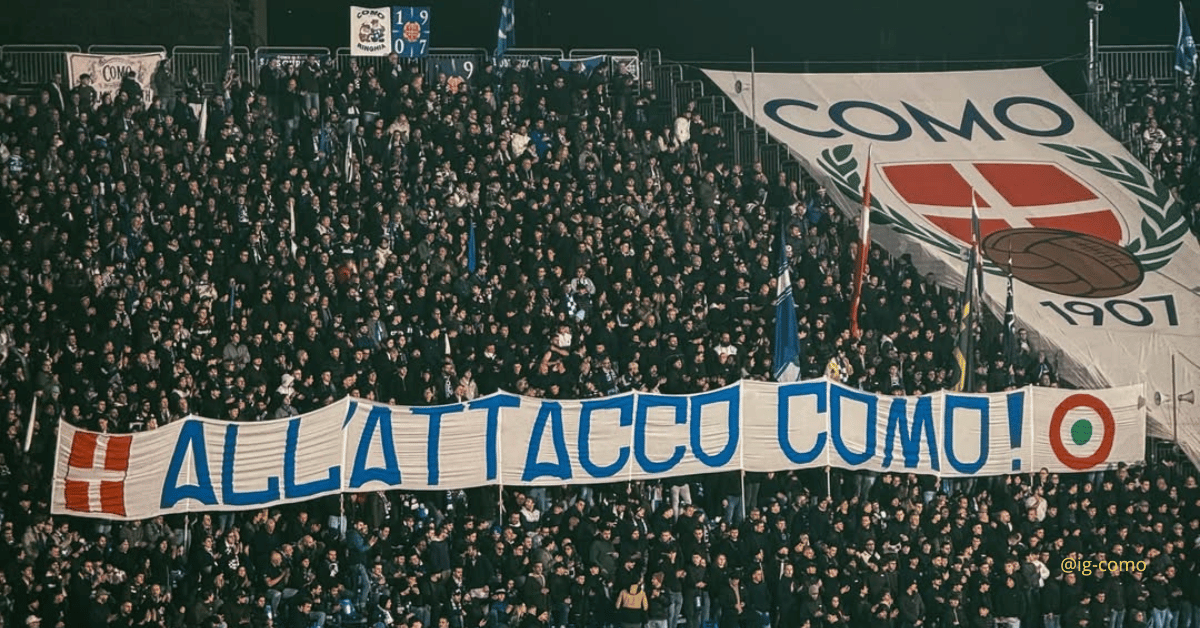

Como 1907 shocked Serie A—but it was about more than just football. Discover how Indonesia’s Hartono family built a business out of a club no one wanted.
The Club Nobody Wanted
Imagine a football club so financially broken that it went bankrupt twice, was auctioned four times with nobody placing a bid, and was eventually sold for less than the price of a mid-range apartment in Milan.
That was Como 1907 — a ghost of a club sitting in one of Italy’s most breathtaking postcards.
Also read: PSG’s Deadly Trio Doué, Dembélé & Kvaratskhelia: The Untold Story Behind Their Rise
Lake Como. Alpine peaks. Mediterranean warmth. Colourful villas that George Clooney, Brad Pitt, and Julia Roberts reportedly call home. A city of just 85,000 people that once served as the backdrop for Star Wars Episode II and Casino Royale. Stunning in every conceivable way — except on the football pitch.
For decades, Como existed in Italy’s football consciousness as little more than a footnote. They managed a few Serie A seasons in the 1980s and early 2000s, but never as genuine competitors — always as cannon fodder.
When mismanagement led to transfer splurge in 2002-03 that backfired spectacularly, the club collapsed into Serie C, then into full bankruptcy by the end of 2004.
A group of local businessmen revived it from scratch in Serie D, but chronic financial instability dragged the club back into administration between 2015 and 2017.
In March 2017, the club was finally sold to Akosua Puni Esien, wife of former Chelsea midfielder Michael Essien. The rescue didn’t hold.
Players went unpaid after three months. Stadium rent and training ground bills piled up. By June 2017, Como declared bankruptcy again — for the second time in 13 years.
Como 1907 Hartono Takeover, Gamble That Changed Everything

Enter Massimo Castro — an Italian entrepreneur and property developer who understood both the country’s business climate and the specific allure of Lake Como as a premium destination.
Castro managed to convince one of Southeast Asia’s most powerful business families that this waterlogged, debt-ridden, twice-bankrupt football club was worth their attention.
In 2019, Djarum Group — through Robert Budi Hartono and Michael Bambang Hartono, two brothers whose combined fortune exceeds $40 billion USD — acquired Como 1907 through their entertainment and media subsidiary, Sen Entertainment. The purchase price: approximately €350,000, or roughly IDR 5.5 billion at the time.
Their first act? Clearing approximately €3 million in accumulated debts that had been strangling the club for years.
But this was no vanity purchase. And that’s what makes the Como 1907 story fundamentally different from the wave of celebrity-driven football investments that have flooded European football in recent years.
Also read: Paul Pogba Nightmare: How a World Cup Hero Lost His Crown After Injuries, Pressure and Scandal
“We did not buy Como to make it like Milan,” said Michael Gendler, the executive brought in to oversee business operations — a man who previously served as Inter Milan’s marketing manager during Erick Thohir’s ownership era. “We bought Como to make it the best version of Como itself.”
The original intention, sources familiar with the project have confirmed, was partly driven by a television concept Garuda Select, a youth football development show broadcast on Mola TV, which aimed to give talented young Indonesians a pathway to European football. Using Como as a base seemed logical.
But FIGC — Italy’s football federation — has strict regulations on recruiting non-European players, requiring prior Italian club registration and residency permits. That door closed quickly.
So the Hartono family pivoted. And their pivot would prove to be far more valuable than the original plan.
Moneyball on Lake Como
With Denise Weiss — a former Premier League player and the original director of Garuda Select — installed as sporting director, Como began rebuilding from the ground up. The philosophy was clear from the start: data over reputation, system over stars.
Como adopted what analysts now describe as a Moneyball approach — the same data-driven recruitment philosophy made famous by Oakland Athletics in baseball and later adapted by clubs like Brentford, Brighton, and AS Monaco in football.
The concept identify players undervalued by the broader market, acquire them cheaply, develop them within a clear tactical system, and either utilise or sell them at significant profit.
“The Moneyball philosophy was chosen because it gave management a clear, rational language to communicate with the Hartono family,” a source close to the club’s sporting department explained. “The owners aren’t football obsessives.
They see football as a modern business. Every signing had to be justified with data.”
Under this strategy, Como avoided the trap most promoted clubs fall into: panic buying inflated names to survive relegation. Instead, they borrowed heavily, acquired free agents with strong underlying metrics, and trusted the process.
The most dramatic proof of this strategy? Nico Paz.
The Argentine midfielder — son of former Real Madrid player Pablo Paz — was signed from Real Madrid Castilla in the summer of 2024 for just €6 million.
In his second season at Como, Paz has emerged as one of Serie A’s most exciting young players.
Also read : Cristiano Ronaldo Makes History Again, Al Nassr Reaches 2026 ACL 2 Final
The club reportedly rejected a €70 million offer from Tottenham Hotspur for the 20-year-old. Analysts suggest the final valuation could exceed that figure significantly before the next transfer window closes.
That is a return of more than 1,000% on a single player acquisition. Moneyball doesn’t just work — at Como, it is transforming the club’s financial architecture entirely.
Fabregas Ball: A Tactical Revolution in Blue and White
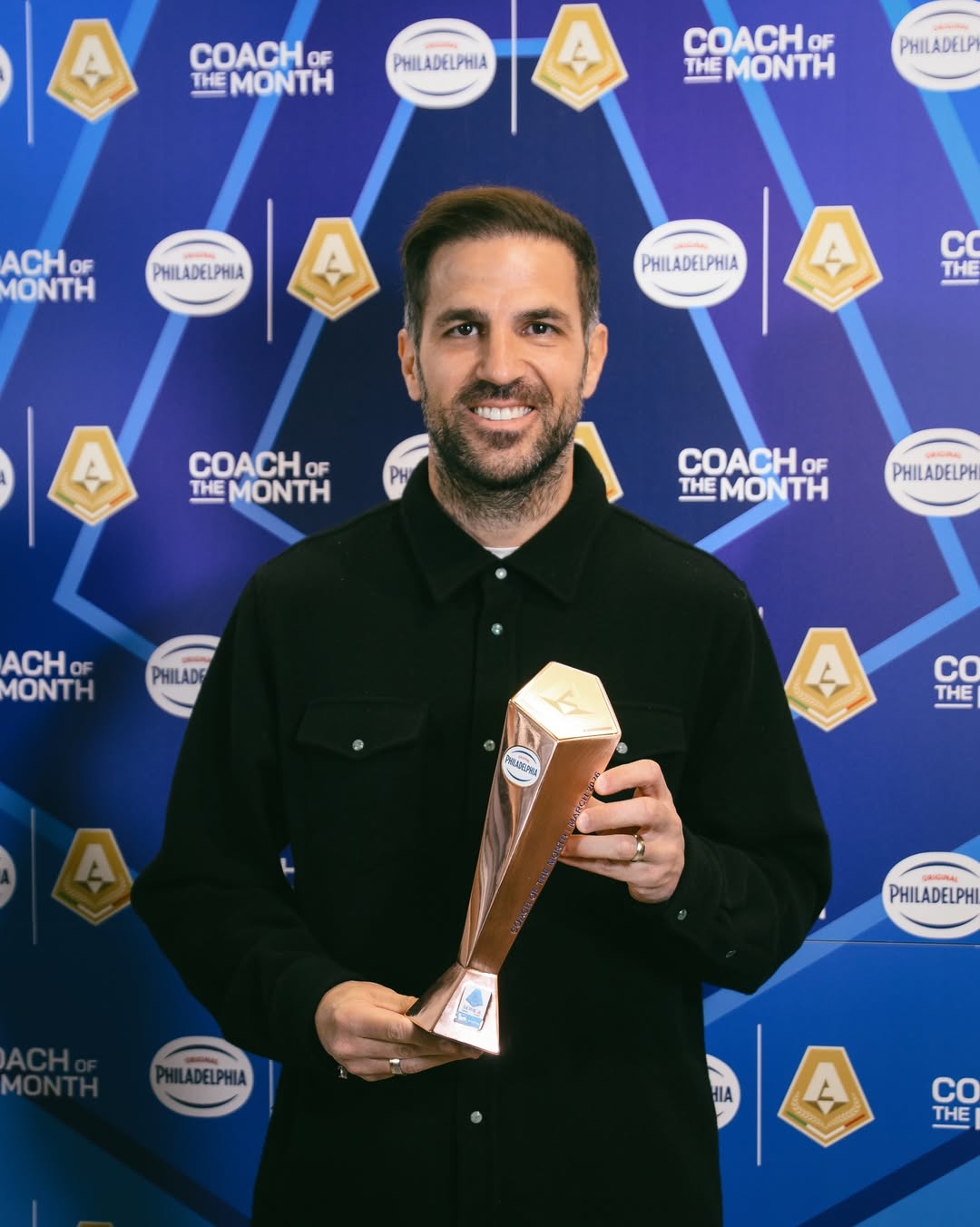
Cesc Fàbregas arrived at Como as a player in 2022 — not as a fading superstar chasing a final paycheque, but as a deliberate part of a longer project. He retired from playing at the end of that season, served as assistant coach, and was appointed head coach in 2024.
What has followed is something Italian football has rarely seen from a newly promoted side.
Fàbregas has built what pundits are now calling “Fabregas Ball” — a system rooted in Spanish football’s golden generation philosophy, applied with Italian tactical discipline.
Ball possession regularly exceeds 60%. Short passing sequences, relentless pressing triggers, and spatial control echo the principles of Johan Cruyff and Pep Guardiola.
“The team that controls the ball controls the game,” Fàbregas said in a pre-match press conference earlier this season.
“That’s not just a style preference. That’s how you protect yourself, how you build momentum, and how you win in this league.”
As of April 2026, Como 1907 sit fourth in Serie A — inside the Champions League qualification spots. For a club that was in Serie D just seven years ago, this is not a fairytale. This is the result of a coherent plan executed with remarkable patience and precision.
The squad’s market value Como one of Serie A’s fastest-rising assets. The Hartono-owned entity is targeting a club valuation of €1 billion in the medium term.
The Disney Model: Football as an Entertainment Ecosystem
View this post on Instagram
Here is where Como 1907 becomes truly unlike anything else in European football.
Mirwan Suwarso, Como’s club president, has articulated the vision in terms that sound more like a Silicon Valley pitch deck than a football chairman’s press release
“We want Como to be like Disney. Disney is a powerful brand, but it doesn’t just exist in films. They have theme parks, merchandise, iconic characters. Como is not just a football club. It is an entertainment ecosystem where the football experience is the main event.”
The logic is deceptively elegant. Lake Como already attracts 4.8 million tourists every summer.
These are premium travellers — affluent, culturally engaged, international. They come for the scenery, the villas, the food, the atmosphere.
The Hartono family’s insight was simple but transformative: make the football club a reason to stay longer, spend more, and come back.
The model operates on four structural pillars: retail, property, academy, and entertainment. Crucially, the football club is positioned not as the core business, but as the centrepiece attraction of a broader destination brand.
If Como were ever to be relegated, the brand, the merchandise, and the tourism infrastructure would continue functioning independently.
“Our strategy,” Suwarso has explained, “is football tourism. People came to Como for the lake.
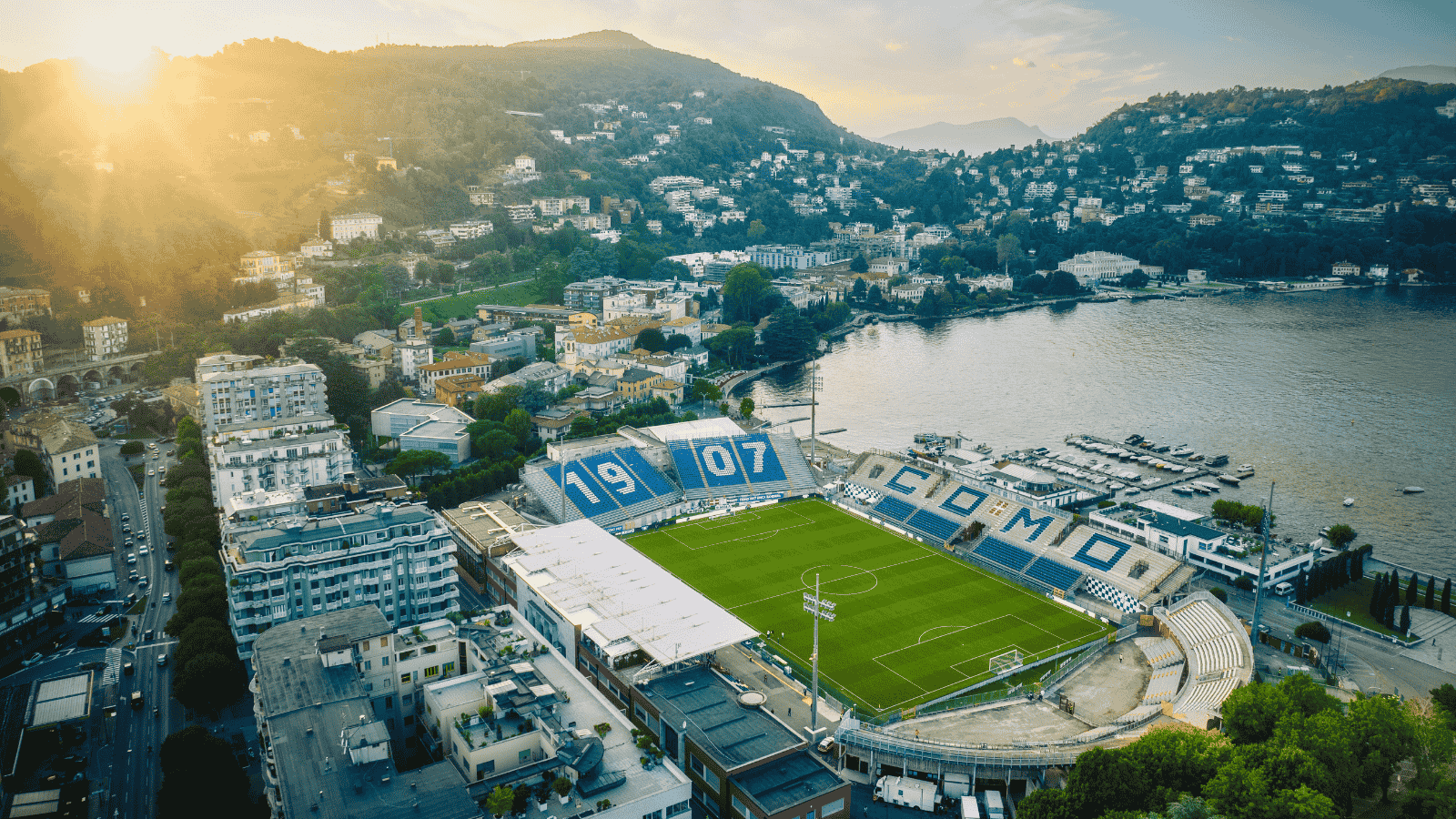
Now we offer packages where they come for the lake, attend a match at Stadio Giuseppe Sinigaglia with its extraordinary views, eat at a lakeside restaurant, and take their children to the club store. The football becomes part of the experience of Como itself.”
The results back up the ambition. Club data suggests that 20% of match-day attendees are international visitors, with that figure reaching 40% in some home fixtures — extraordinary numbers for a Serie A club outside the traditional powerhouses.
Revenue Explosion: From $7 Million to $100 Million Per Season

This commercial transformation is astonishing in its speed.
When the Hartono family first arrived and Como was operating in Serie B, annual revenues were in the region of $7 million USD.
Today, with Como firmly established in Serie A and a fully operational commercial ecosystem, that figure has risen sharply in less than six years.
Merchandise sales have been a particular breakthrough. Como’s retail strategy deliberately positions the club’s apparel as a lifestyle and fashion brand—not just a supporter’s merchandise.
Also read: Gabriel Batistuta: The Wild Striker Who Chose Loyalty Over Glory — and Still Became a Legend
The goal is for people to buy a Como shirt not because they follow the team, but because they appreciate its aesthetic. The club controls nearly the entire supply chain, from warehousing to official retail stores, and operates over 400 affiliated stores along with a dedicated e-commerce platform targeting international markets.
Revenue from merchandise sales has soared, with 12% of sales coming from buyers in the United States alone.
Celebrity investors Thierry Henry and Cesc Fàbregas (in his dual role as coach and shareholder) added cultural appeal that strengthened the brand globally without the club needing to chase headlines through expensive star signings.
The Significance of Como 1907 for Indonesian Football
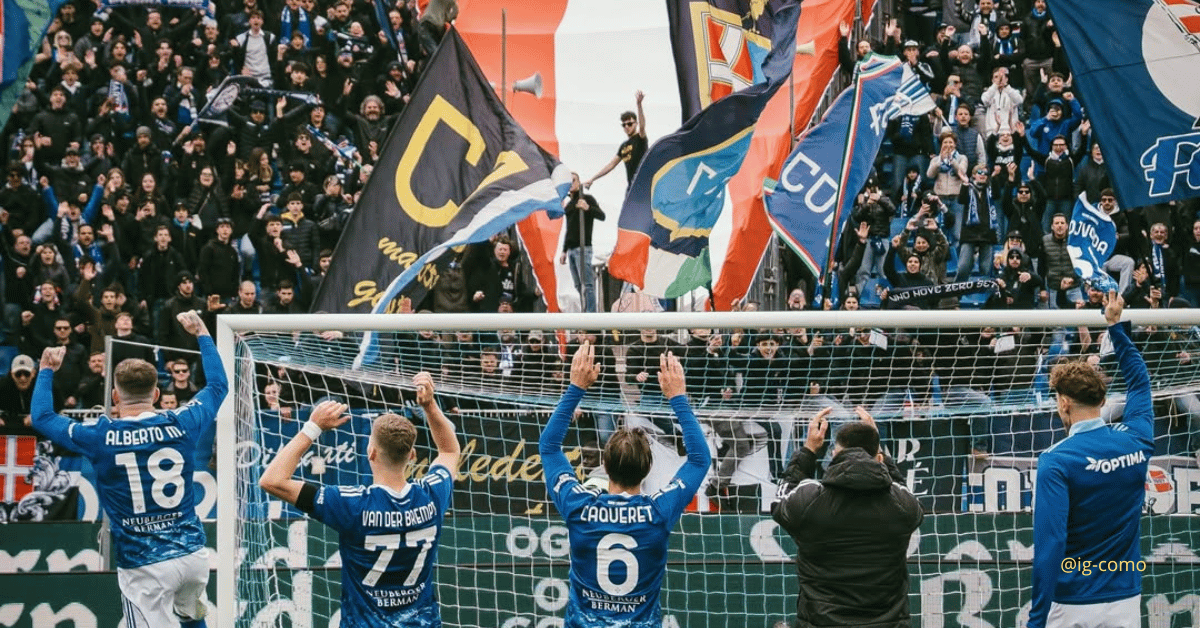
Beyond business metrics and league standings, the story of Como 1907 holds profound meaning throughout Indonesia.
For the first time, an Italian club is thriving—and potentially heading for the Champions League—under Indonesian ownership.
A country once considered merely a consumer market for European football, home to one of the largest fan bases on the planet, is now a serious participant in the industry at the highest level.
“Indonesia is not just a country with the largest football fan base in the world,” said Suwarso. “We are also a serious player in this industry. Como proves that.”
In five years, Como 1907 has completed a transformation that most established clubs take decades to achieve, from a forgotten club and twice-bankrupt to a wealthy club and Champions League contender, and a case study in sustainable football business that business schools should be studying.
The journey is not over. A Champions League campaign will unlock revenue and global visibility on an entirely new scale.
However, what the Hartono family, Fabregas, Nico Paz, and everyone else at the Stadio Giuseppe Sinigaglia have built is extraordinary enough.
The most beautiful lake in world football has found its most beautiful team. And behind that idyllic backdrop, Indonesia’s most influential business family is quietly rewriting the rules of what a football club can be.

1 Comment